Pipet Design, a London design studio specialising in printed fabric and accessories for fashion and interiors, recently completed an interior commission for The Imperial College London.
Here, Gina Pipet, the founder and designer, takes us through the design process of this commission as part of the major refurbishment of 170 Queen’s Gate grand campus building.
170 QUEEN’S GATE
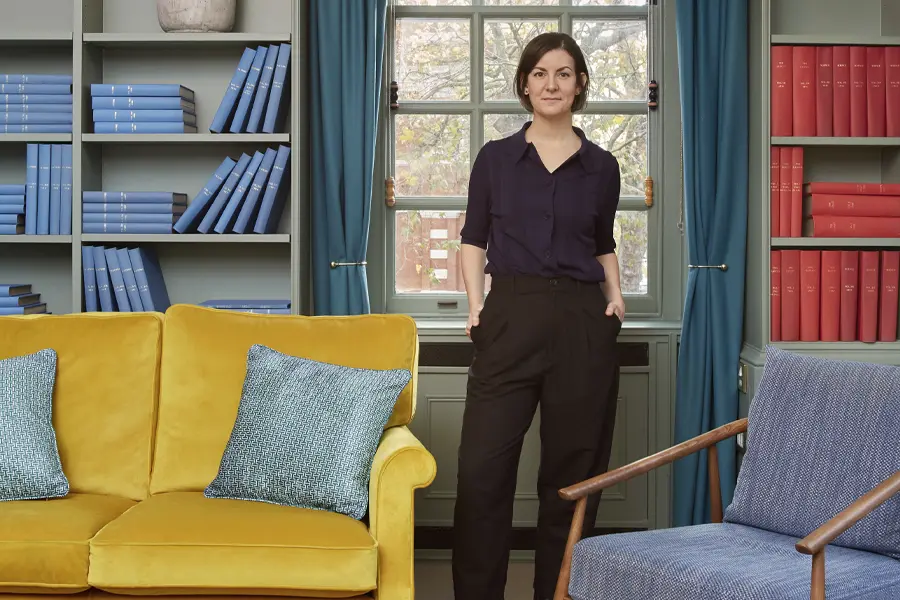
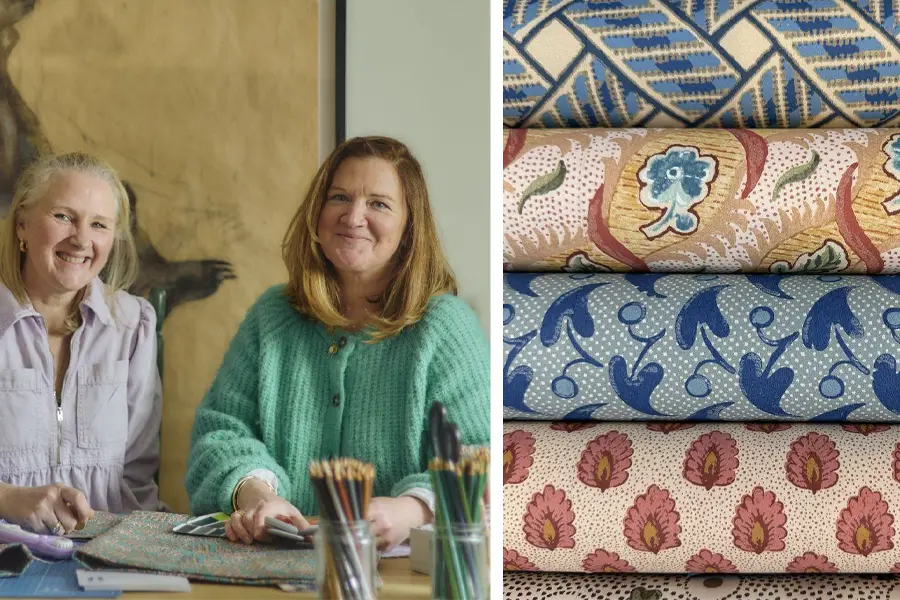
Part of a major rebranding project, the brief was to create a set of patterned textiles that reflected Imperial College London’s new fresh identity. Three bespoke fabrics were designed, developed and printed for use as window blinds, upholstery and soft accessories (yes, that’s a lot of windows).
170 Queen’s Gate is a four storey Victorian Grade II listed townhouse on the campus of Imperial College London. It was designed by the architect Richard Norman Shaw for Frederick Anthony White, a wealthy cement manufacturer and amateur of art and architecture and was completed in 1889. Imperial College London has owned the house since 1947.
Initially, it was the residence for the Rector/President and visiting academics and as the Governing Body meeting rooms. The house has recently undergone a major refurbishment and the use changed to conference rooms and a staff social facility.
The sympathetic refurbishment had a focus on sustainability, reworking its existing furniture and fittings where possible. I was pleased to be able to meet the sustainable needs of the client through custom design, eco fabrics, exact made-to-order quantities, and local UK print production.
WINDOW BLINDS
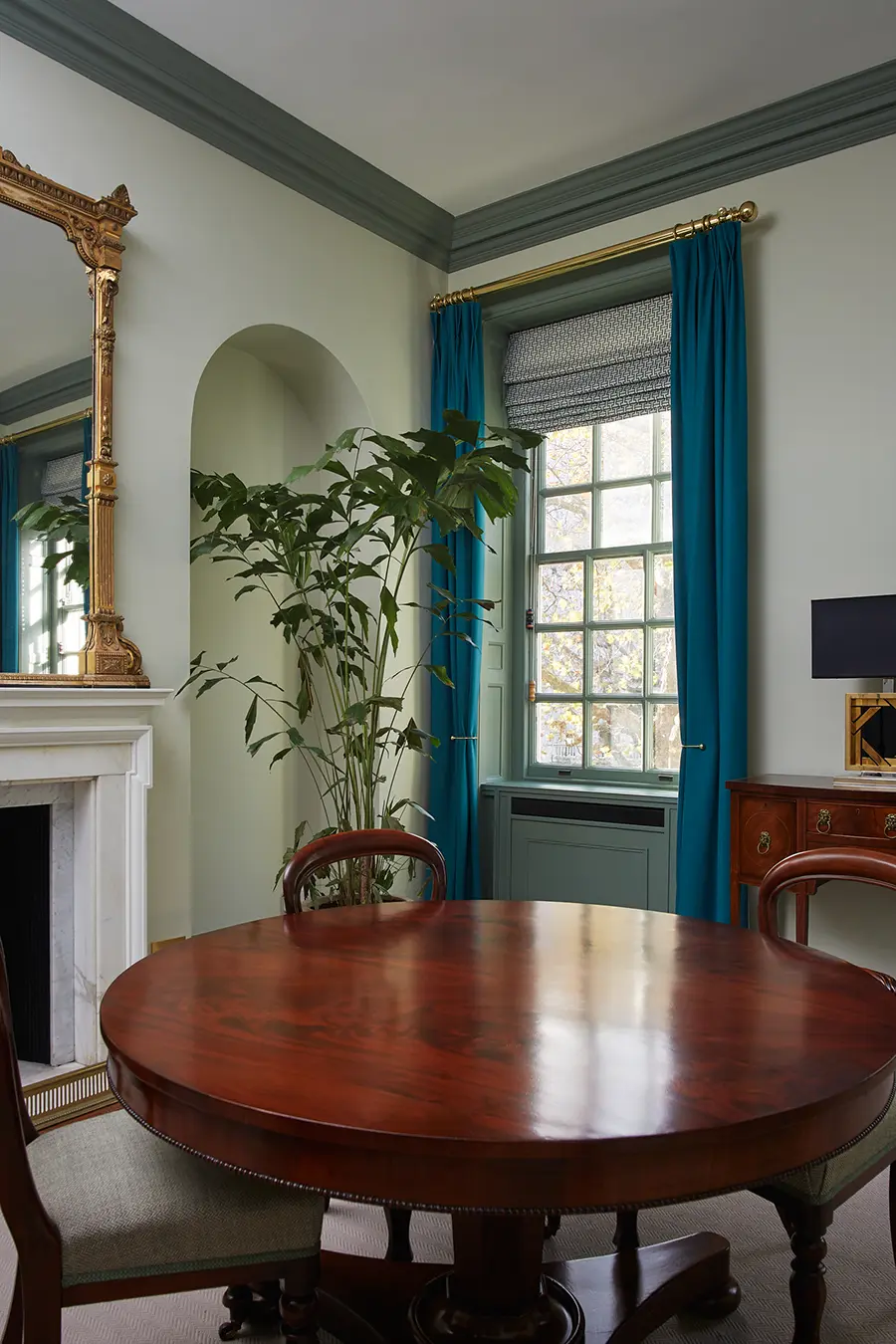
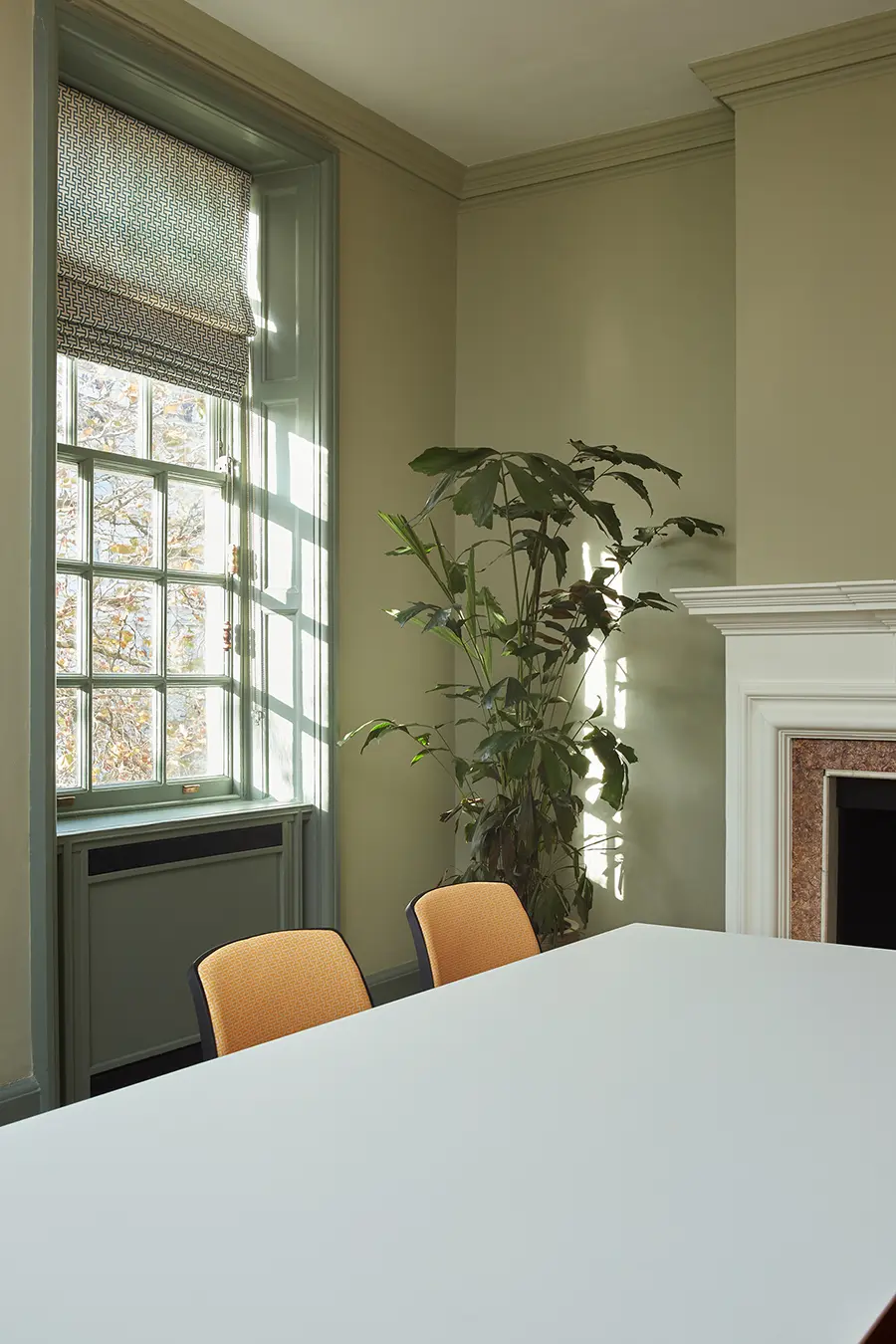
To sit with Imperial’s new fresh identity, the outdated heavy floral swags and drapes were replaced with lighter fabrics in a more subtle, personalised geometric pattern.
Designed to coordinate with the new elegant full-length drapes, the bespoke blinds feature a rich dark teal motif on a light colour ground. Printed on to a heavyweight satin each blind was fully custom-made to dress the 40 public facing windows of this characteristic property.
ACCENT CUSHIONS
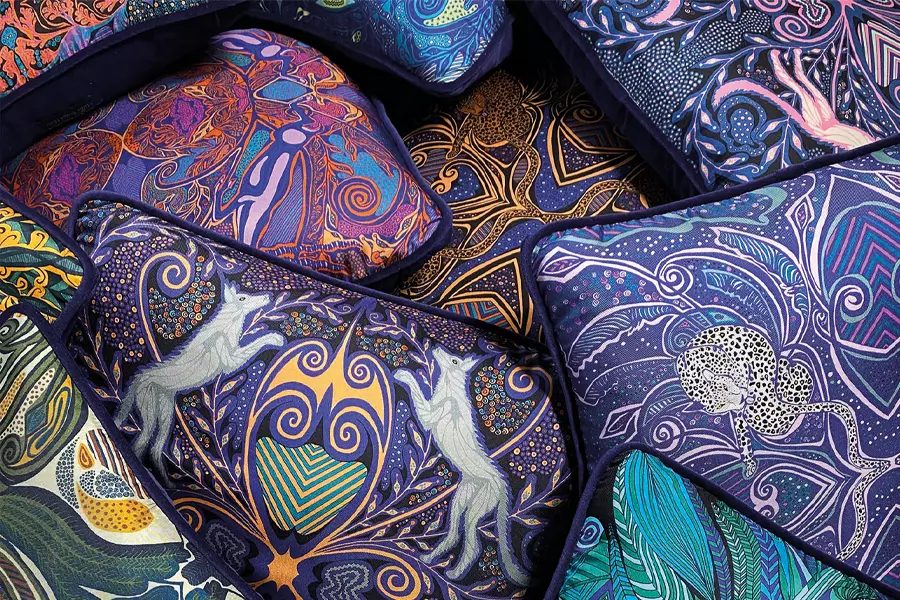
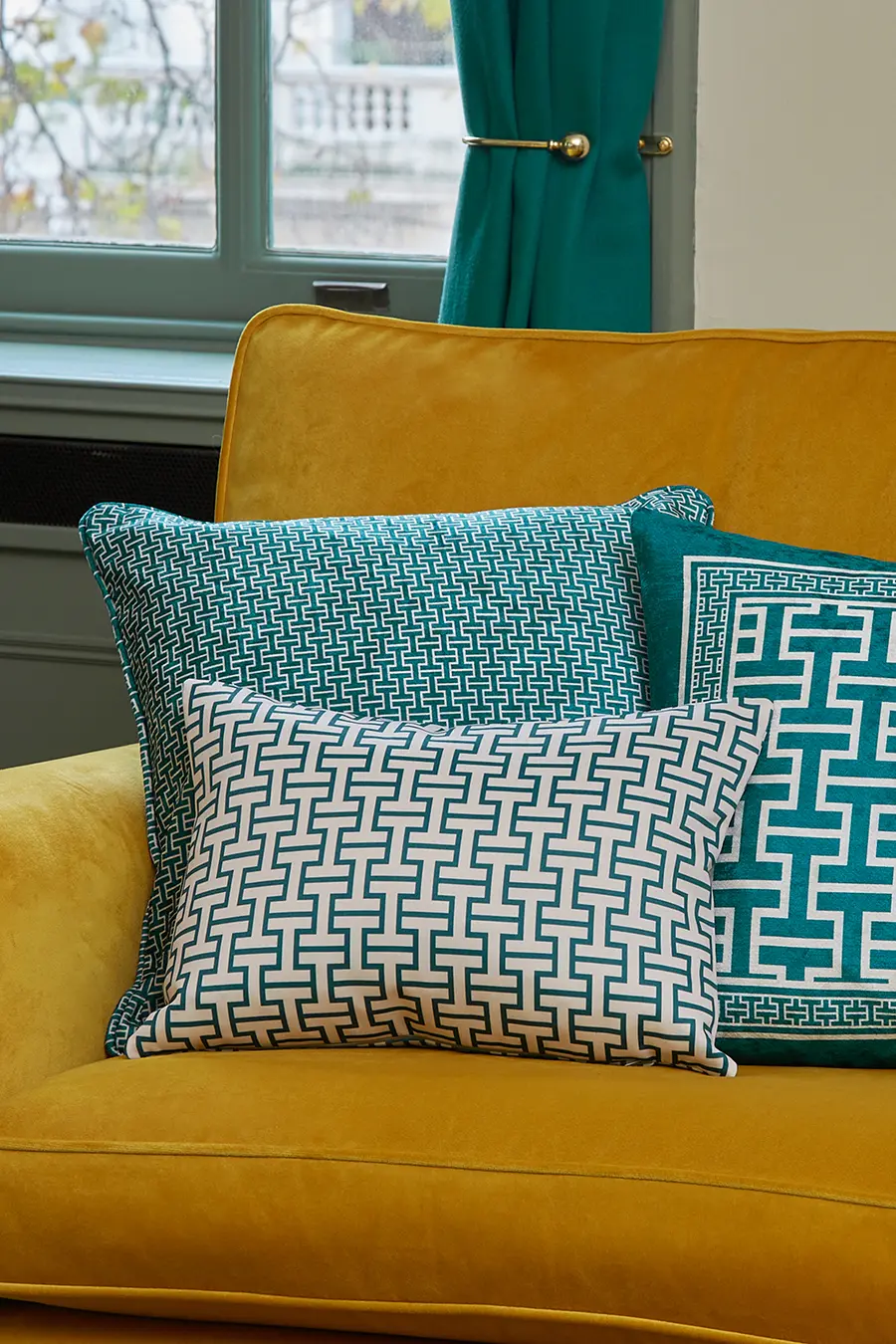
Accent cushions are a fantastic way to add comfort to a room whilst providing a focal point through each of the spaces. For 170 Queen’s Gate, the client enjoyed the opportunity to go bold on the cushions, allowing me to have a lot of fun with different colour combinations within Imperial’s extended new palette.
Together we opted for a selection of soft velvet cushions made from a beautifully printed chenille velvet. Reducing the palette down to two colours created a coherent overall scheme matching the window blinds.
CLIENT RELATIONS
Being entrusted to deliver on such a wonderful project as 170 Queen’s Gate really put me to the test on sourcing the right suppliers who could help me on this new set of products. Visiting the site and having in-person design meetings enabled me to realise what was in my client’s mind, as well as attaining a feel of the building, it’s scale, and period features.
Working closely with local printers I was able to offer a range of high quality, eco-conscious fabrics that not only printed beautifully but that stood up to the strict requirements of the project. Demanding deadlines were met and new project scales were successfully accomplished. I must admit I pushed hard. And it was worth it.
Gaining a client’s trust can be challenging, so when Imperial asked me to take on a second project half way through the first, there was a huge feeling of accomplishment.
FABRIC SELECTION
Our roman blinds for 170 Queen’s Gate were custom printed on a heavyweight satin. Selected for the beautiful print finish and smooth appearance it complimented the wide array of luxurious textures used throughout the scheme. With this many windows to dress, an important factor was also ease of handle. The contractor did a fantastic job working with the fabric, the pattern matching and finish of make.
UKAS certified, the fabric complied with the flammability requirements BS5867-2:2008, Type B, without the need for chemical treatments. This was really important as it eliminates potential risk to health and reduces future maintenance required in keeping these fabrics compliant.
DESIGN & DEVELOPMENT
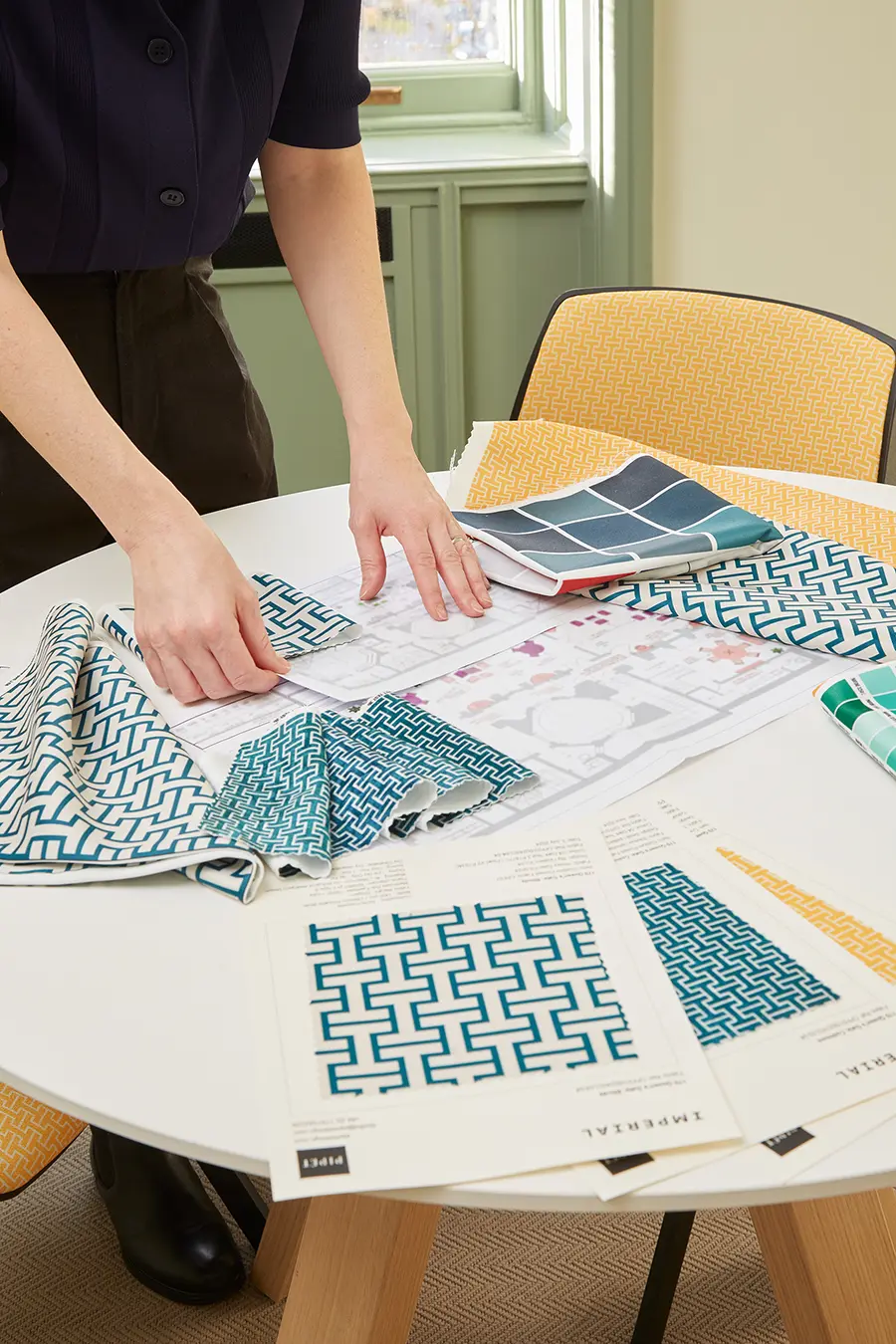
From comfort to practicality, it was important to create a cohesive fabric story throughout the four floors of the building. UKAS certified fabrics were sourced and tested to comply with the strict technical requirements of FR and Contract grade fabrics used throughout. Rigorous sampling and colour development aided in the delivery of crisp clean print results whilst meeting the client’s concept and design style.
For this project I worked closely with the client’s nominated furnishing contractor who took on the final manufacturing stage. Full specs and technical data sheets were provided, discussing pre and post production minutiae to ensure the finest results were achieved across all finished product.
CONFERENCE SEATING
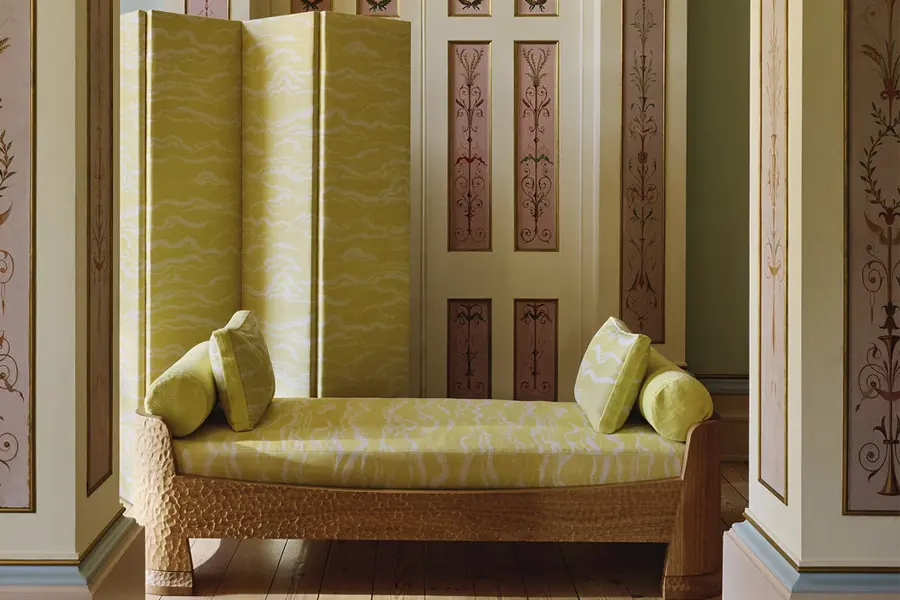
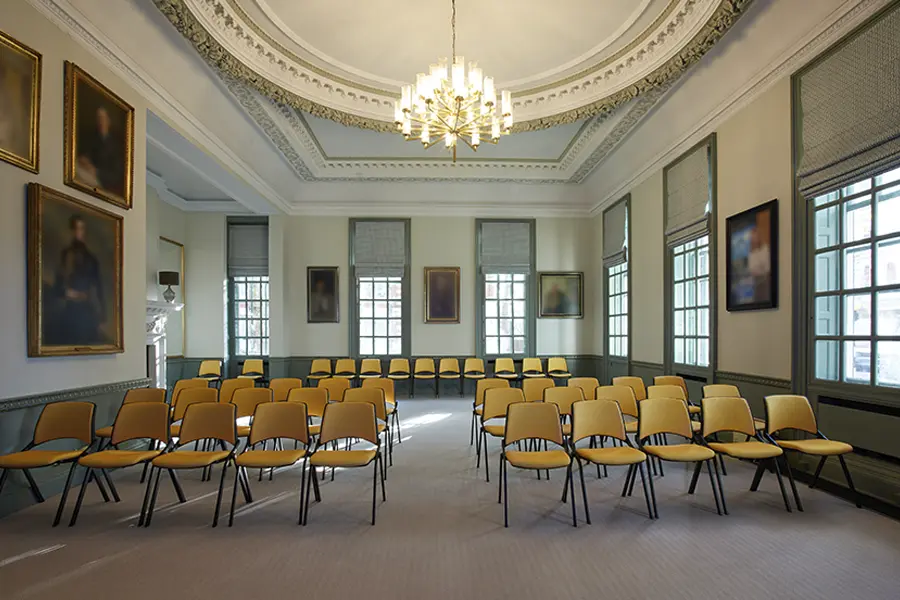
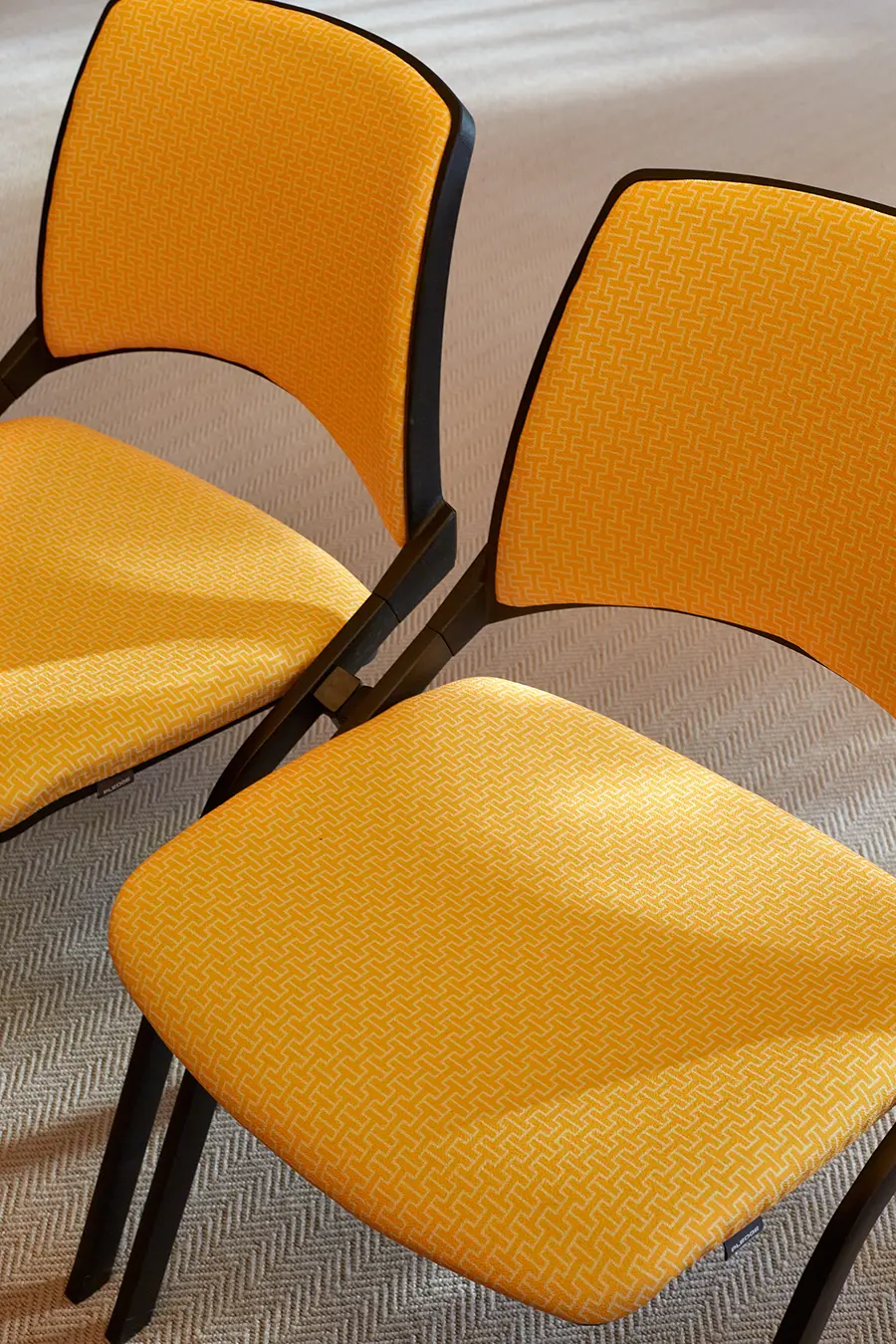
I was delighted to add a touch of uniqueness to Imperial College London’s wonderful new conference suite with a custom printed fabric.
The bespoke print features Imperial’s branded motif in a subtle all-over pattern. The rich yellow base echoes the golden decorations, gilded frames and mouldings seen in the room. A joyful colour choice, it conjures a sense of vitality, bringing energy and engagement to the meeting space.
PERFORMANCE AND COMPLIANCE
For the reupholstery of these conference chairs I sourced a hard-wearing eco upholstery fabric. With an optic white base, it took colours well and even with a slight irregular texture held the print detail beautifully.
The fabric selection worked a dream. Each chair was expertly recovered providing a professional level of finishing, making these a contemporary addition to the room.
Made from 100% recycled fibres, the eco credentials added to the conscious and thoughtful refurbishment whilst meeting the strict requirements of upholstery, seating and interior projects. A high-grade FR fabric, it achieves a Martindale count of 100,000+ rubs, and is certified to flame retardant (FR) standards BS 5852 – Source 0,1 & 5 – Crib 5 FR.
BESPOKE DESIGN & PRINT
Upholstery projects have always been high on my wish list, so I was delighted to help Imperial College London customise the seating for their new conference rooms. Working across multi-product applications I was able to provide a cohesive set of fabrics that subtly told the client’s story.
Clients may choose custom fabrics for a variety of reasons. Sometimes it is to tell their story through a bespoke artwork, fit in with the colour scheme or aesthetic, or purely to have something completely unique. Often it can be because there is a need for a special piece that is not available on the market.
The more we consider sustainability as consumers the more re-upholstery and custom-made production can help reduce excess waste and produce something with longevity and purpose.
If you have a project that needs direction in print design and fabric development then Gina would love to help.
Please get in touch with your project outline at [email protected]
Website: pipetdesign.com
Imperial College London
“A world-leading university where science never stands still.”
Imperial is a global top ten university in London and is ranked No.1 in Europe and No.2 in the world.
Website: imperial.ac.uk
Photography: Jon Aaron Green
DISCOVER ANOTHER DESIGN STORY HERE.