In period properties made up of multiple buildings, it’s often the space between them that defines how well they work as a home. Forgeworks shows how carefully considered architecture in these in-between moments can unlock flow, function, and a sense of calm.
Too often, links and connectors are treated as leftover space; a corridor, a pass-through, a box that joins two things with little thought. But when approached as architecture in its own right, these in-between moments can reshape how a home is used and felt. They offer a chance to reorient, to bring coherence, and to give purpose to otherwise disconnected structures.
In rural and historic settings, where homes evolve over time through additions and conversions, this kind of architectural clarity becomes essential. Forgeworks focuses not on spectacle, but on precision, aligning views, creating thresholds, and using honest materials to bring spatial calm. It’s a way of designing that respects what’s there, while quietly making it work for contemporary life.
In the rolling Mendip hills of Somerset, not far from Bruton and Castle Cary, Forgeworks Architects completed a sophisticated transformation of a 19th-century farmhouse and its adjoining barn for a young family.
‘A House of Blue Lias’ was conceived as a low-key, high-craft response to the clients’ desire for a unified family home that respected the existing vernacular while resolving practical issues of flow, warmth, and liveability.
Reconnecting buildings and people
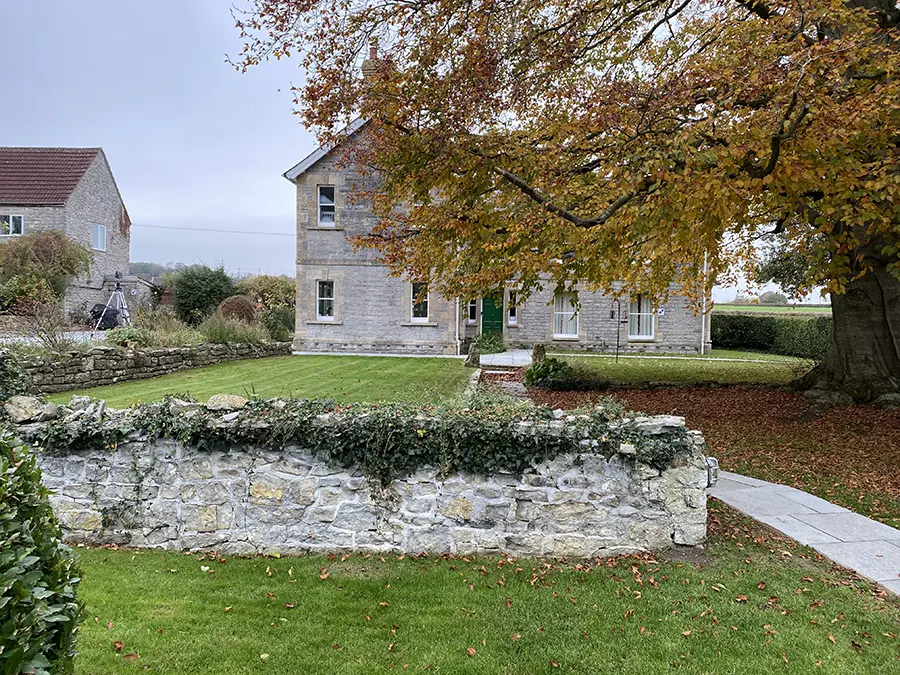
When the owners first approached Forgeworks, they weren’t looking for grand statements or architectural acrobatics. What they needed was more intangible: a sense of cohesion. Their home consisted of a historic farmhouse and a poorly converted barn, separated by a drive and lacking any meaningful connection. The barn was underused, plagued by damp and impossible to regulate thermally. The farmhouse retained its charm but was beginning to feel isolated from family life.
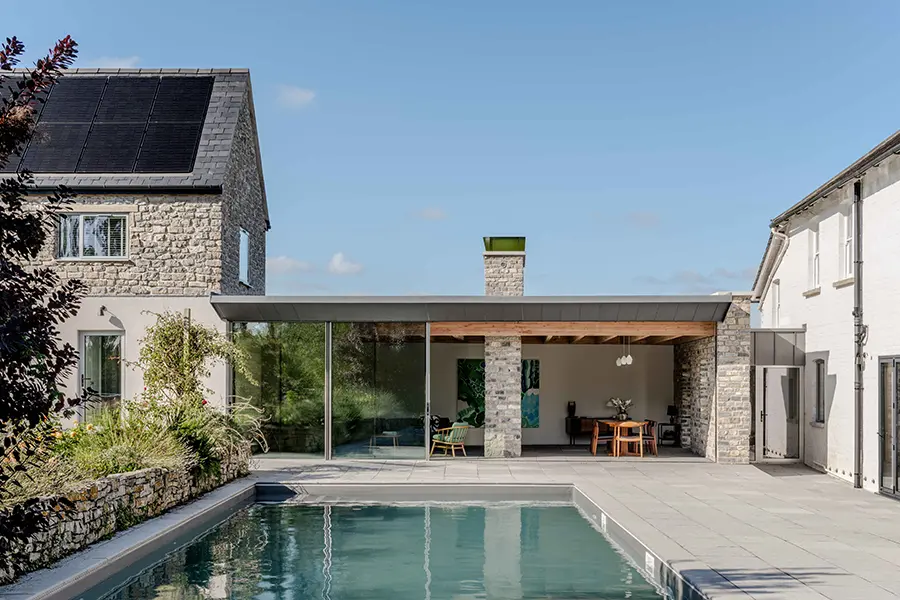
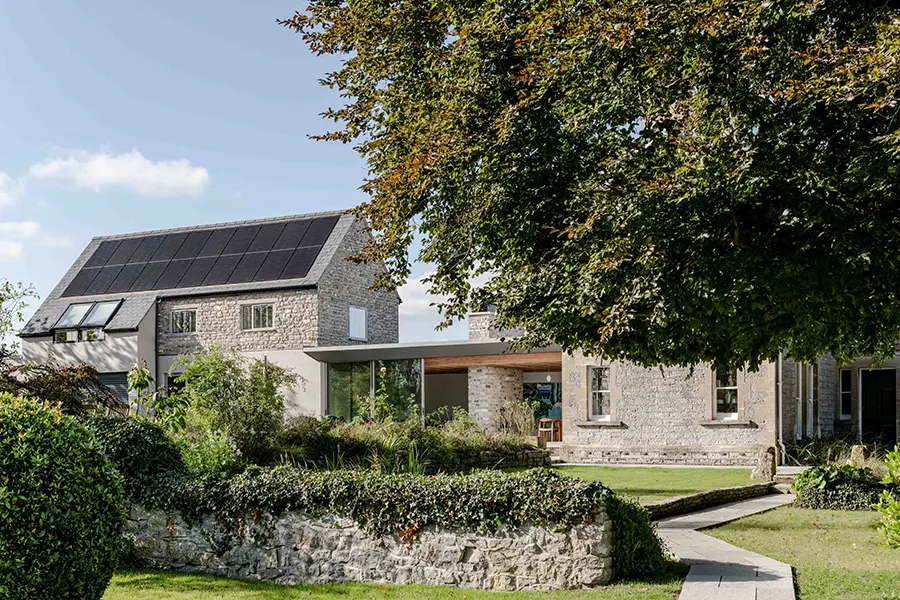
Forgeworks’ solution was to introduce a new ‘link’ building, modest in scale but transformative in experience. Placed between the two structures, this new volume houses a formal living and dining space that now acts as the social heart of the home. Its design is quiet and precise, emphasising texture, proportion, and natural light over architectural bravado.
Timeless design, built to last
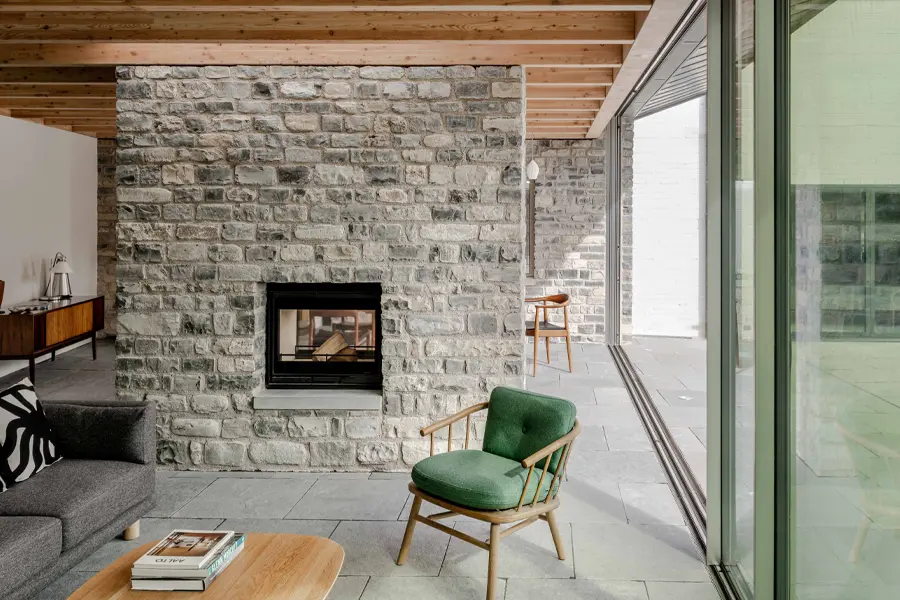
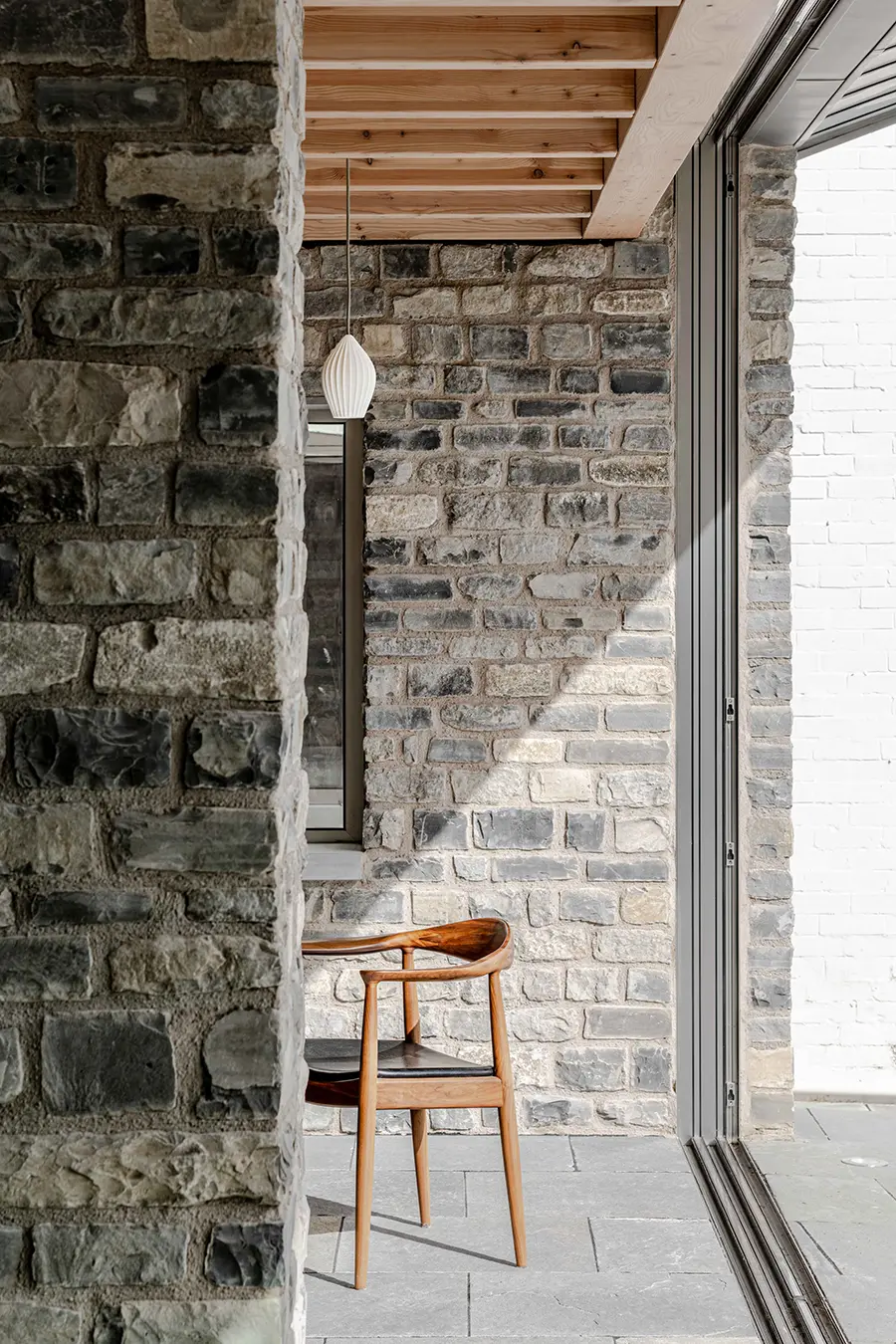
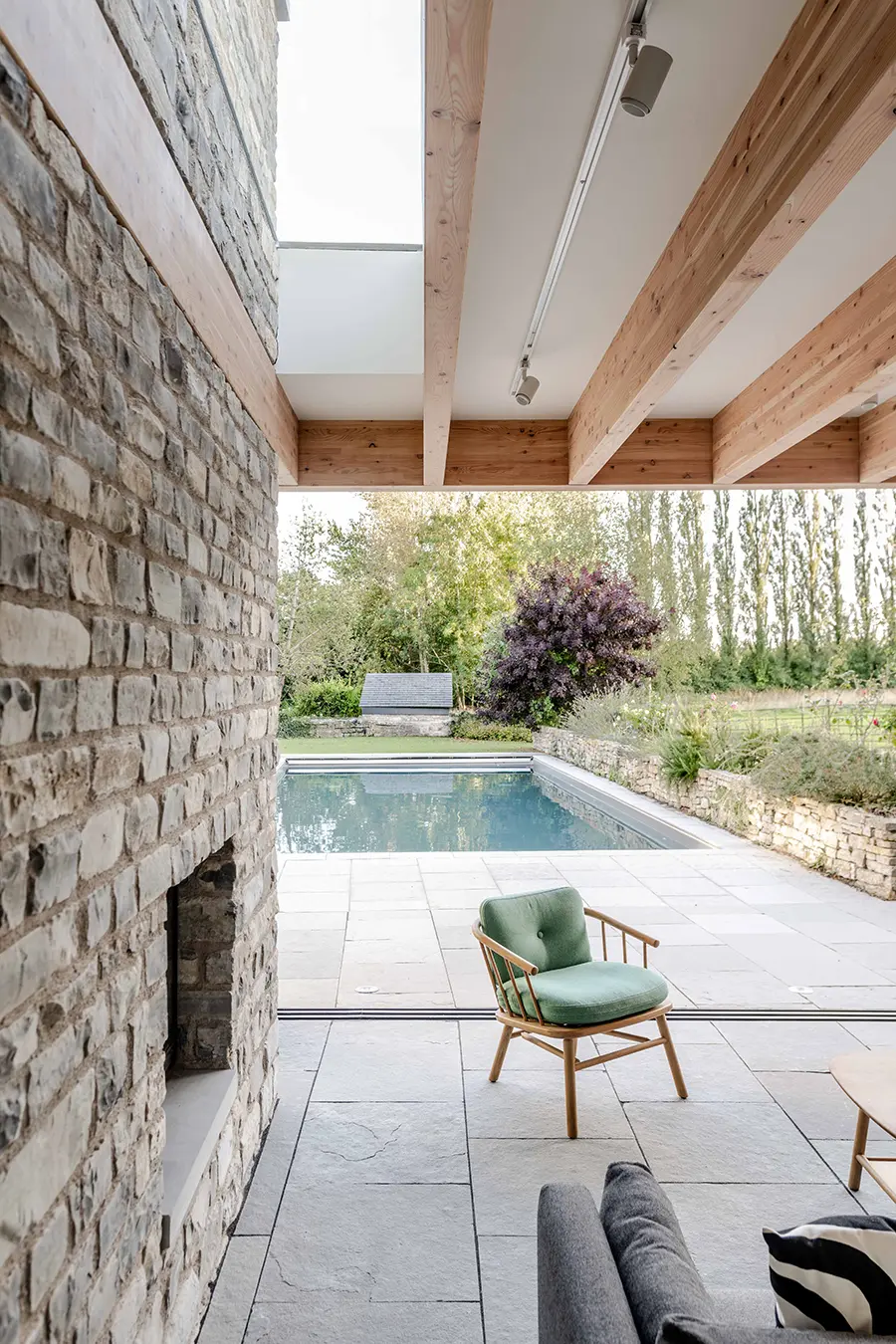
Clad in locally quarried blue lias stone and topped with a gently pitched roof of exposed glulam timber, the link building is a study in restraint. Five glazed panels run its full width, sliding open to connect both the farmhouse and barn to a south-facing terrace and swimming pool. The sense of openness is immediate, yet so is the feeling of warmth and enclosure thanks in part to a freestanding chimney that bisects the room and houses a dual-aspect log burner.
Throughout, the detailing is quietly exacting. The spruce-lined ceiling is laid out in harmony with the glazing joints and chimney placement, offering a rhythm and resolution rare in domestic projects. Where glass meets stone, the joinery is subtle and deliberate. The roof appears to hover, its overhang carefully calculated to offer seasonal shading, while the use of glulam allowed the team to minimise the amount of visible steel, helping the space feel more elemental and grounded.
“The clients had a strong appreciation for American mid-century architecture, stonework, articulated rooflines and open hearths, says Chris Hawkins of Forgeworks. Those themes helped shape the new structure, which is confident in its simplicity but rooted in craft.”
Forgeworks describes the house as “engineered but calm”, a phrase that speaks to the practice’s underlying design philosophy: to let materials and light do the talking, rather than resorting to stylistic gimmickry.
Sustainability without shouting about it
The barn was gutted to its stone shell and retrofitted to meet modern standards of thermal efficiency, now housing bedrooms, bathrooms, a study and a generous playroom, and a garage for the owner’s collection of vintage cars.
An array of solar panels and battery storage systems now powers the entire property, complemented by an air source heat pump that supplies both domestic heating and the swimming pool. Inside the link building, the mass of the stone and limestone flooring helps regulate temperature throughout the year, while concealed blinds provide shading at key moments in the shoulder seasons.
Forgeworks takes a softly spoken approach to sustainability, prioritising passive design, material durability, and low-maintenance strategies over flashy tech.
A more connected way to live
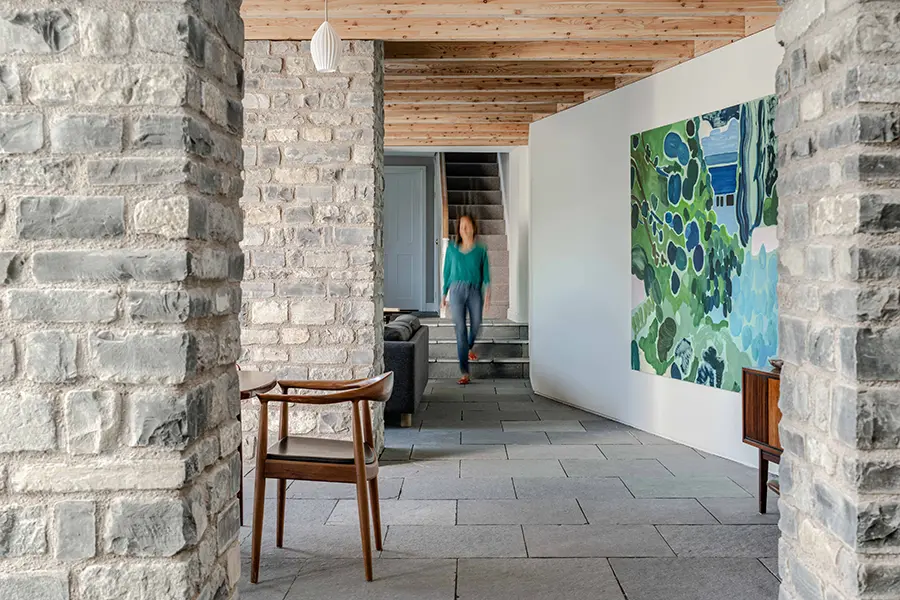
Spatially, one of the most transformative gestures is also one of the simplest: a new 25-metre-long axis now connects the entire home, running in a straight visual line from the farmhouse kitchen, through the dining space, to the barn’s far wall. Combined with the full building footprint, the house now stretches over 50 metres in total. Where once there was disconnection and damp, there is now a continuous flow of space, light and air.
A window placed between the new and old buildings offers a glimpse back into the kitchen… a reminder of the past, framed through the present.
It’s this kind of subtle choreography that defines Forgeworks’ work. The studio isn’t interested in overwriting the existing story, but in enriching it.
“We believe that architecture is at its most powerful when it responds to the place and the people it’s made for,” explains Chris Hawkins of Forgeworks. “It should help life happen more easily. And in a way that’s beautiful, but also natural. Lived-in.”
Before
A personal process, a quietly ambitious practice
Forgeworks’ approach to architecture is rooted in deep personalisation, craft and clarity. Every project begins with intensive conversations with clients, uncovering not just aesthetic preferences but lifestyle rhythms, practical needs and long-term aspirations.
This detailed briefing phase is followed by a design process that is as much about editing as it is invention, balancing architectural rigour with contextual sensitivity.
The practice is known for its ability to deliver quietly confident homes that feel grounded and enduring.
“A House of Blue Lias” encapsulates this attitude: it’s a home that doesn’t shout, but sings, crafted with humility and purpose, and delivered with care.
New interviews and introductions are published weekly, each offering insight and advice into the design & art industries, talking from their unique experiences. We chat with emerging and established interior designers, brand founders and artists.
Immerse yourself into the inspiring brand stories from next generation brands and creatives, along with recommended events and reviews to spark new creative ideas.
Sign up to our newsletters and we’ll keep you in the loopwith everything good and important going on in the worlds of design, art and independent retail.
EXCLUSIVE STORIES AND INSIGHTS
BE THE FIRST TO KNOW ABOUT OUR FEATURE OPPORTUNITIES & EVENTS
STUDIO/ESTILA OFFERS AND MUCH MORE
By subscribing you agree to receive updates from ESTILA. We will not share your data with any third parties. Read our full privacy policy here.
We use cookies on our website to give you the most relevant experience by remembering your preferences and repeat visits. By clicking “Accept All”, you consent to the use of ALL the cookies. However, you may visit "Cookie Settings" to provide a controlled consent.
This website uses cookies to improve your experience while you navigate through the website. Out of these, the cookies that are categorized as necessary are stored on your browser as they are essential for the working of basic functionalities of the website. We also use third-party cookies that help us analyze and understand how you use this website. These cookies will be stored in your browser only with your consent. You also have the option to opt-out of these cookies. But opting out of some of these cookies may affect your browsing experience.
Necessary cookies are absolutely essential for the website to function properly. These cookies ensure basic functionalities and security features of the website, anonymously.
Functional cookies help to perform certain functionalities like sharing the content of the website on social media platforms, collect feedbacks, and other third-party features.
Performance cookies are used to understand and analyze the key performance indexes of the website which helps in delivering a better user experience for the visitors.
Analytical cookies are used to understand how visitors interact with the website. These cookies help provide information on metrics the number of visitors, bounce rate, traffic source, etc.
Advertisement cookies are used to provide visitors with relevant ads and marketing campaigns. These cookies track visitors across websites and collect information to provide customized ads.