“Public transport being accessible isn’t just about disability. It’s also about a little child in a push chair or a pram, a mother, a grandmother.” Artist Michelle Baharier told me. As the mother of a child who once had severe mobility issues, this felt profoundly personal.
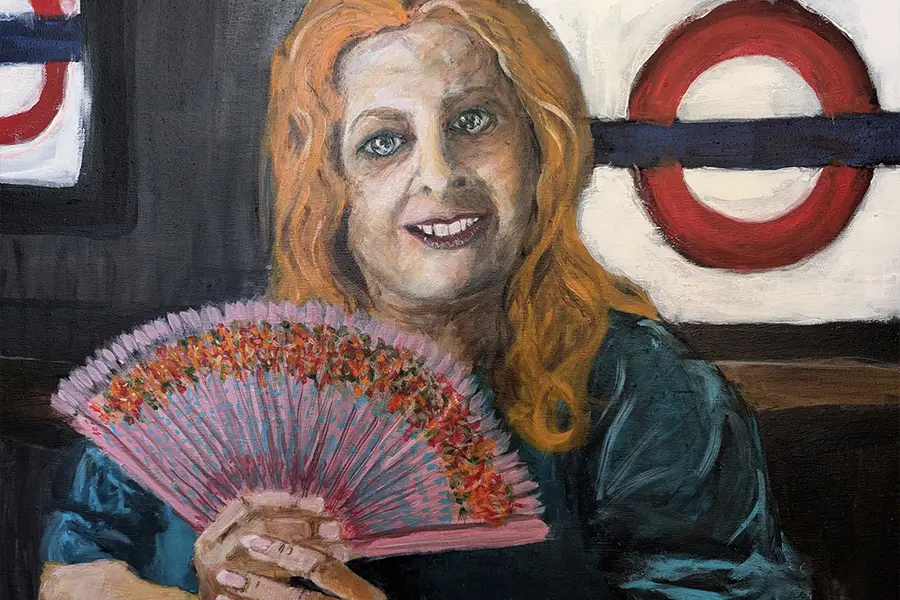
In her art project Filling in the Gaps, Michelle Baharier uses portraiture to create a body of work that sits at the intersection of social history, visual storytelling and contemporary expressive figurative painting.
Presented as a solo exhibition at Art Space, Marylebone Parish Church, from 4-26 March 2026, the project brings ten powerful new portraits, commissioned by London Transport Museum, into dialogue with a historic architectural setting.
Rather than approaching accessibility as an abstract issue, Michelle focuses on the individuals who have shaped it – the disability rights activists whose campaigning has transformed access to public transport in the UK, placing human presence and lived experience firmly at the heart of the work.
Portrait Painting is as Collaboration between Artist and Sitter
Each portrait in Filling in the Gaps is the result of close collaboration between artist and sitter. Baharier’s process is conversational and responsive, allowing the paintings to develop slowly through shared reflection rather than formal posing. This approach gives the works a sense of intimacy that I believe will resonate strongly in a museum context, particularly at a time when audiences are hungry for authenticity.
Symbolism plays a central role in Michelle’s compositions. Elements of transport iconography, including references to the TfL roundel, appear alongside personal objects chosen by the sitters. In Sharon’s portrait, for example, a finely detailed fan becomes both a compositional anchor and a marker of individuality.
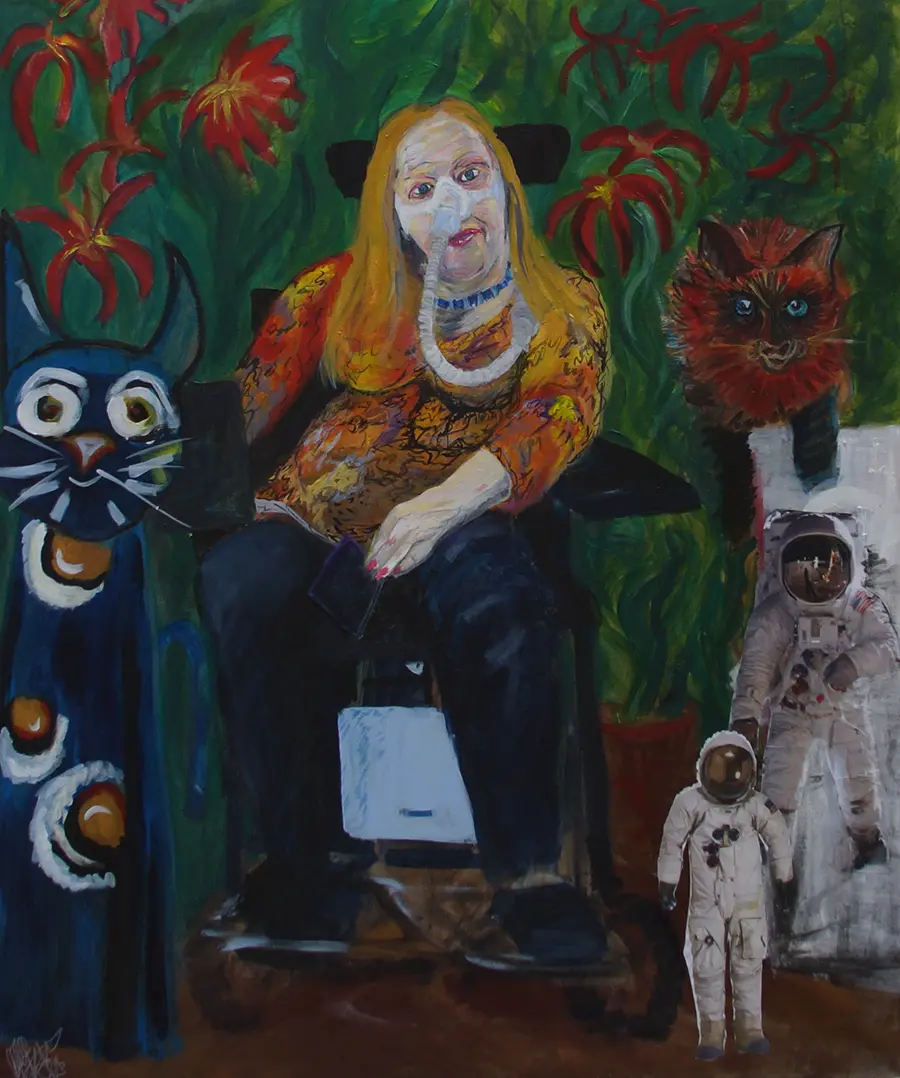
These visual cues function like a design language, embedding personal narrative and activism directly into the surface of the painting. Michelle doesn’t shy away from making the viewer uncomfortable either, often depicting the wheel chairs and other equipment of her disabled sitters in her portraits.
For artists and interior designers, the work offers a compelling study in how stories, symbols and figuration can coexist without becoming illustrative. The portraits remain painterly and focused, allowing meaning to emerge through detail, colour and compositional balance.
A Significant Moment for Contemporary Portraiture
This art commission marks the first time the history of the disabled people’s movement has been presented on a national scale through portrait painting. The project also builds on Baharier’s earlier commission with Disability Arts Online, with several of those earlier portraits entering the London Transport Museum Collection alongside the new works.
Among the sitters are Baroness Jane Campbell and Sue Elsegood, an activist known for chaining herself to buses during the 1980s to protest the exclusion of wheelchair users. Their stories are expressed into the visual language of each painting, allowing the work to operate simultaneously as art and historical record.
Art, Space and Lasting Presence
While rooted in Michelle’s activism work, Filling in the Gaps ultimately functions as a cohesive visual series. The paintings reward observation, revealing layered meanings through brushwork, gesture and symbolism. They invite consideration not only of who is represented, but how representation itself shapes cultural memory.
As a project Filling in the Gaps represents a rare example of socially engaged portraiture with a national programme of smaller highly accessible exhibitions designed to engage not only art lovers but also, crucially the general public, and ultimately entering a major museum collection. Other shows include Turf Projects in Croydon (December 2025) and SHARP Gallery, which is in a hospital setting, emphasising the accessibility aspect of the project (February 2026). Further shows are planned for later in the year at Tramshed in Greenwich and Southwark Heritage Centre.
Following the completion of the exhibition series, the full body of work will enter the London Transport Museum Collection at the end of 2026, securing its place within the national archive. In doing so, Baharier’s portraits extend beyond the temporary exhibition context, becoming part of the visual language through which future audiences understand access, movement and public space.
For artists, curators, and designers alike, Filling in the Gaps offers a thoughtful example of how contemporary portraiture can engage with social history while remaining visually rigorous, spatially sensitive and deeply human in its deliberate expressionism.
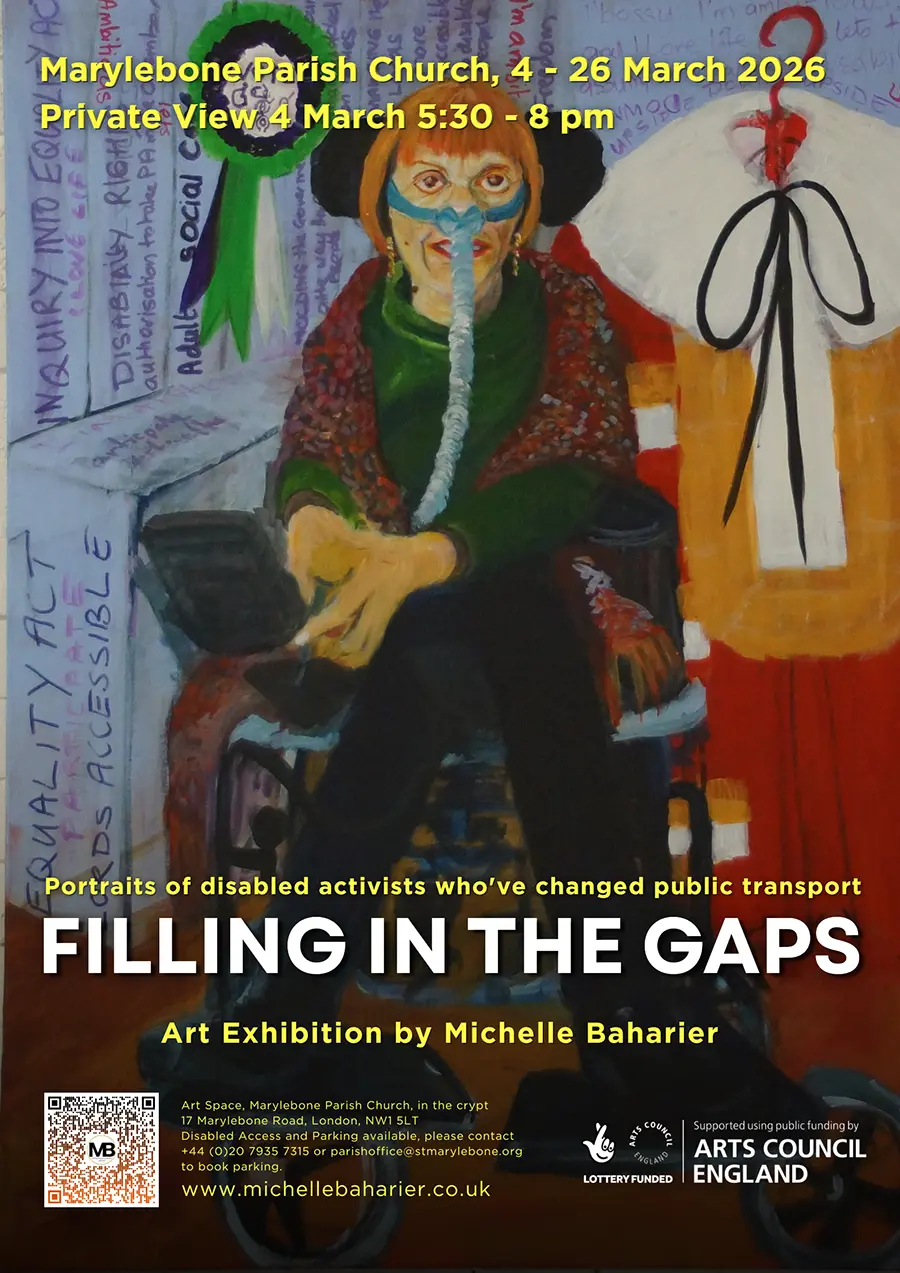
You are invited to attend the Private View: 4 March, 5:30-8pm. Book for Free on Eventbrite.
Author: Paola Minekov is an artist, Cofounder of Creations Atelier and Creative Director at Elysium Lifestyle Magazine
DISCOVER ANOTHER ART STORY HERE.